Jeremy's persona was crafted using the nuanced phases of CLIMBER:
1. Customer: Exploring Jeremy's fears and aspirations, we grasped his desire for engaging, accessible gaming.
2. Life: We examined his daily activities and how a game like 'Head Game' could seamlessly integrate into his lifestyle.
3. Insight: Our brainstorming led to innovative solutions tailored to Jeremy's auditory prowess.
4. Mechanism: The game's design was aligned with these insights, ensuring an immersive experience for him.
5. Build: Prototyping focused on creating an intuitive, accessible interface for Jeremy.
6. Evaluate: We continuously evaluated the game's impact on Jeremy's gaming experience.
7. Repeat: Iterations were made to refine and adapt the game based on his feedback and needs.
For a deeper dive into our comprehensive application of the CLIMBER model in developing Jeremy's persona, refer to our detailed documentation.
Exploring the Market Landscape
In our quest to develop 'Head Game', we conducted an extensive market review to understand the current landscape of games tailored for visually impaired users. This exploration was crucial in identifying gaps and opportunities for innovation. We examined several notable games, each offering unique auditory-based experiences. These included:
- Unheard: A game that revolves around solving mysteries using voice identification.
- Soundvoyager: Focused on rhythm recognition and sound localization challenges.
- Vanished: A survival game set in complete darkness, relying on auditory cues.
- Papa Sangre: A game that involves navigating levels and solving puzzles using sound.
Each of these games provided valuable insights into the use of audio for gameplay, shaping our understanding of what makes an engaging and accessible auditory gaming experience. This market analysis not only informed our design decisions but also inspired us to push the boundaries of what’s possible in accessible gaming.
Redefining the Product Design of 'Head Game'
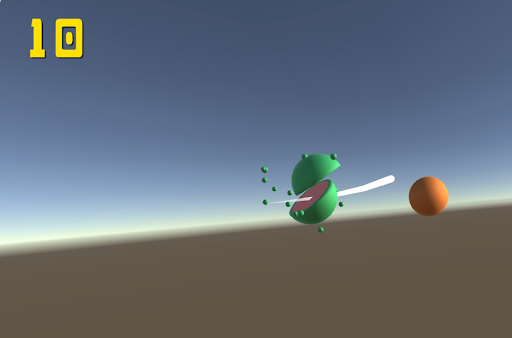
In designing 'Head Game', we embraced cutting-edge technology to redefine gaming experiences for the visually impaired. Our game ingeniously integrates Text-to-Speech and Speech-to-Text plugins, facilitating interaction without relying on visual cues. Players engage in the game by moving their heads, directing their focus in the game's 360-degree audio space. Each fruit in the game emits a unique sound, allowing players to differentiate and locate them spatially. The action of slicing fruits is activated by a simple screen press, creating an intuitive and immersive experience. This innovative design not only makes gaming accessible but also offers a novel way of interaction for all players.
Research Methods
Interview with Professor Intriligator
Our discussion with Professor James Intriligator, a key figure in the development of 'Head Game', provided invaluable insights. He highlighted the challenges in spatializing audio, emphasizing the need for clear and precise auditory cues. Professor Intriligator also suggested incorporating a variety of game modes, like arcade and relaxation, to enhance user engagement. He stressed the importance of user-friendly menu navigation for visually impaired players and recommended utilizing existing game codebases for efficient development. This interview was instrumental in shaping the game's design, ensuring it met the needs of our target audience while pushing the boundaries of accessible gaming technology.
Interview with Kaitlyn
In our interview with Kaitlyn, the Product Manager at Perkins School for the Blind, her expertise in Cortical/Cerebral Visual Impairment (CVI) was pivotal. She recommended low-stakes navigation and familiar environment simulation for cognitive mapping. Kaitlyn emphasized the importance of storylines, music, and narrators in enhancing the gaming experience. Her insights on addressing motion-induced nausea and the use of Apple's accessibility features were invaluable for making 'Head Game' a more inclusive and engaging experience for visually impaired players.
Literature Reviews
Revisiting the MDA Framework in 'Head Game'
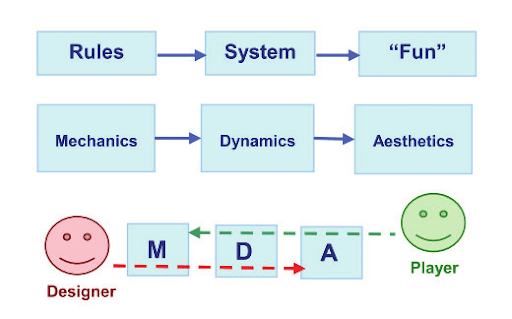
In our literature review, we delved into the Mechanics-Dynamics-Aesthetics (MDA) Framework, a critical tool in game design. This framework guided us in understanding and structuring 'Head Game'.
- Mechanics: We focused on the core components of the game, including the unique audio and control systems.
- Dynamics: This involved examining how these mechanics interact with player inputs, creating a dynamic and engaging gameplay experience.
- Aesthetics: Our goal was to evoke specific emotional responses, ensuring an immersive and enjoyable experience for visually impaired players.
This framework was pivotal in shaping 'Head Game', allowing us to create a game that is not only accessible but also deeply engaging.
Evolving Game Play with Dynamic Difficulty Adjustment
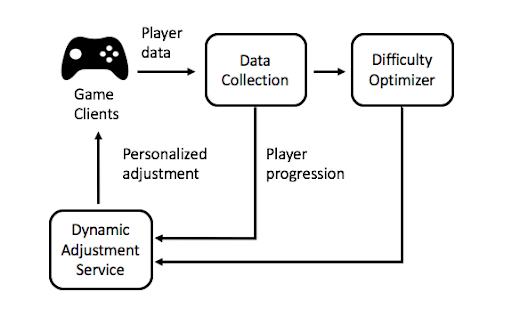
'Head Game' incorporates Dynamic Difficulty Adjustment (DDA), an innovative feature enhancing the gaming experience. DDA allows the game to adapt its difficulty in real-time, aligning with each player's skill level. This approach ensures that 'Head Game' remains challenging yet accessible, providing a tailored experience. It keeps the game engaging for all players, from beginners to experts, by dynamically balancing the level of challenge to match the player's abilities. This concept is central to our design philosophy, ensuring that 'Head Game' is enjoyable and inclusive for everyone.
Integrating Cognitive Task Analysis (CTA) in Game Design
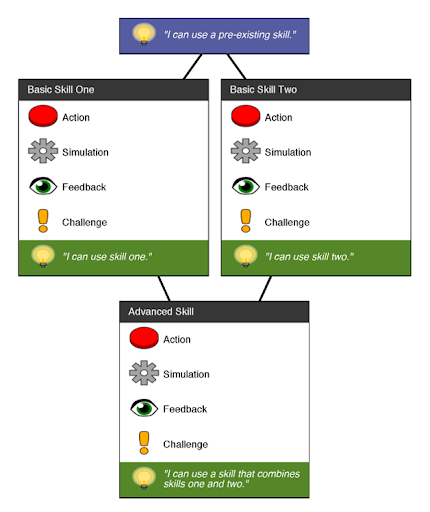
Our literature review highlighted the importance of Cognitive Task Analysis (CTA) in game design. This method can significantly impact game design, specifically in understanding the skill chain required by players.
CTA allows us to dissect the decision-making and problem-solving abilities needed in gameplay, offering deep insights into player engagement and learning processes. This approach goes beyond just crafting a challenging game; it aims to create experiences that are both educational and enriching. It ensures that players are not only entertained but also gain skills and knowledge as they play.
To the right, we present a straightforward example of the Skill Chain. Utilizing CTA is key in developing games that entertain while contributing to cognitive growth and skill acquisition.
Evolving Design: The Iterative Journey of 'Head Game'
Our project saw several iterations, evolving from initial concepts to the final design. We started with the idea of a maze game, focusing on auditory cues to navigate. Then, we considered an 'escape room' scenario involving sound-based puzzles. However, feedback from interviews revealed concerns about these concepts. They lacked the engagement factor we aimed for and risked creating a sense of confinement. This feedback was crucial in steering us towards our final design, where we combined familiar gameplay mechanics with innovative auditory and motion control features. This iterative process was vital in refining 'Head Game' into an accessible, engaging, and enjoyable experience for all players.
Refining the Final Design of 'Head Game'
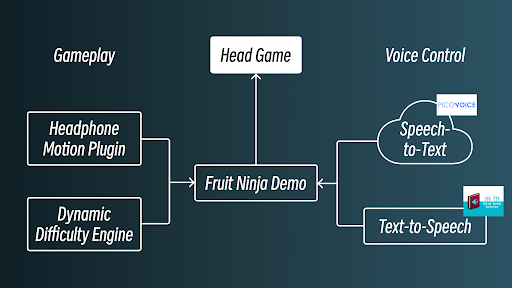
For our final design, our game integrates advanced technology for a unique, user-centered gaming experience. It features two key components: The Gameplay Section and the Voice Control Section.
The Gameplay Section uses the Headphone Motion plugin with AirPods Pro, allowing players to control the game through head movements. This innovative approach is coupled with our self-developed dynamic difficulty engine, which adapts the game's complexity based on player skill.
The Voice Control Section, utilizing the cloud-based Picovoice Unity SDK (so we need to connect to the Internet) and iOS TTS, enables voice commands and text-to-speech for a hands-free experience. Our game merges these elements with the familiar Fruit Ninja mechanics, creating a fun, engaging, and accessible game for a broad audience.
Final Design
In the final design of 'Head Game', we transformed the familiar gameplay of 'Fruit Ninja' into an immersive auditory experience. The game employs spatialized audio and motion control, enabling players to navigate and interact based on distinctive auditory cues. This approach removes the reliance on visual input, making the game accessible for visually impaired players. The design emphasizes precise audio cues for navigation and includes unique sound profiles for different in-game elements, like fruits and bombs, enhancing the gaming experience. The aim is to further refine this technology and expand the game's voice control functionalities.
Physical, Cognitive & Emotional Task Analyses
Our approach to task analysis in 'Head Game' was comprehensive, focusing on physical, cognitive, and emotional aspects. We observed a skilled gamer playing the game with eyes closed, utilizing the game prototype. This enabled us to understand the frequency and distinctiveness of audio cues, such as the sounds of fruits and ticking bombs. Based on these insights, we refined the game mechanics, ensuring an engaging and accessible experience for all players, regardless of their visual ability.
Recommendations Based on Questionnaire Analysis
Our questionnaire analysis yielded valuable insights for refining 'Head Game'. Key areas of focus included:
- Instructor's Voice: We plan to explore diverse voice options to cater to all user preferences.
- Game Goals & Sound Cues: Enhancements in tutorials and sound clarity are considered to assist users who face challenges.
- Control Scheme: Investigating user feedback on control difficulties to simplify interaction.
- Background Music: We aim to maintain the engaging music while offering customization options for varied tastes.
- Player Engagement: Strategies to captivate the minority of users who were less engaged are in development.
This feedback is crucial for optimizing the game's accessibility and enjoyment for all players.
Final Result (Demo)
Gleaning Insights from Usability Testing
Our usability test with Theodore, an experienced gamer and MSEE student from Tufts, provided crucial insights into 'Head Game'. We observed the effectiveness of auditory cues and spatial technology, noting the need for more harmonious sound design and precise spatial audio. The gyroscopic technology in AirPods was a standout, integrating well into gameplay. We also noted the effectiveness of the voice interface, despite some minor glitches. Theodore's adaptation to the slicing mechanics emphasized the need for intuitive controls. Finally, the test highlighted the need for a more sophisticated dynamic difficulty engine to keep the game engaging and balanced.
Wrapping Up and Looking Forward
In conclusion, 'Head Game' has revolutionized the traditional 'Fruit Ninja' game into an auditory-centric experience, emphasizing accessibility. Utilizing spatialized audio and motion control, the game challenges traditional gameplay, focusing on auditory cues. Our future direction includes refining the spatial audio for greater precision and broadening voice control capabilities. We're also exploring the integration of advanced dialogue systems with Large Language Models and enhanced Text-to-Speech models for more natural interactions, continually pushing the boundaries of accessible gaming.